
EMERGING APPLICATIONS OF SUPERCAPACITORS
OF ROBOTICS
28/02/2026
Synergy that accelerates sustainable electrification
Contemporary robotics is evolving at a dizzying pace, pushing systems to become more responsive, autonomous and adaptable. To support this growth, energy can no longer be managed solely by traditional batteries: solutions are needed that can deliver immediate power peaks, absorb energy in a very short time and guarantee reliability even under constant stress. Supercapacitors fit perfectly into this context, becoming key tools for the new generation of robots.
Instant energy for complex movements
In modern robots, from collaborative cobots to heavy industrial robots, efficiency depends on the ability to react in real time.
Cobots and precision robots: in delicate movements, such as electronic assembly or handling fragile materials, supercapacitors provide immediate energy to correct trajectories and respond to unexpected events.
High-power industrial robots: during welding, pressing or robotic arms moving heavy loads, supercapacitors provide energy for intense peaks without overloading the main batteries, preserving their useful life.
Mobile robots and autonomous vehicles
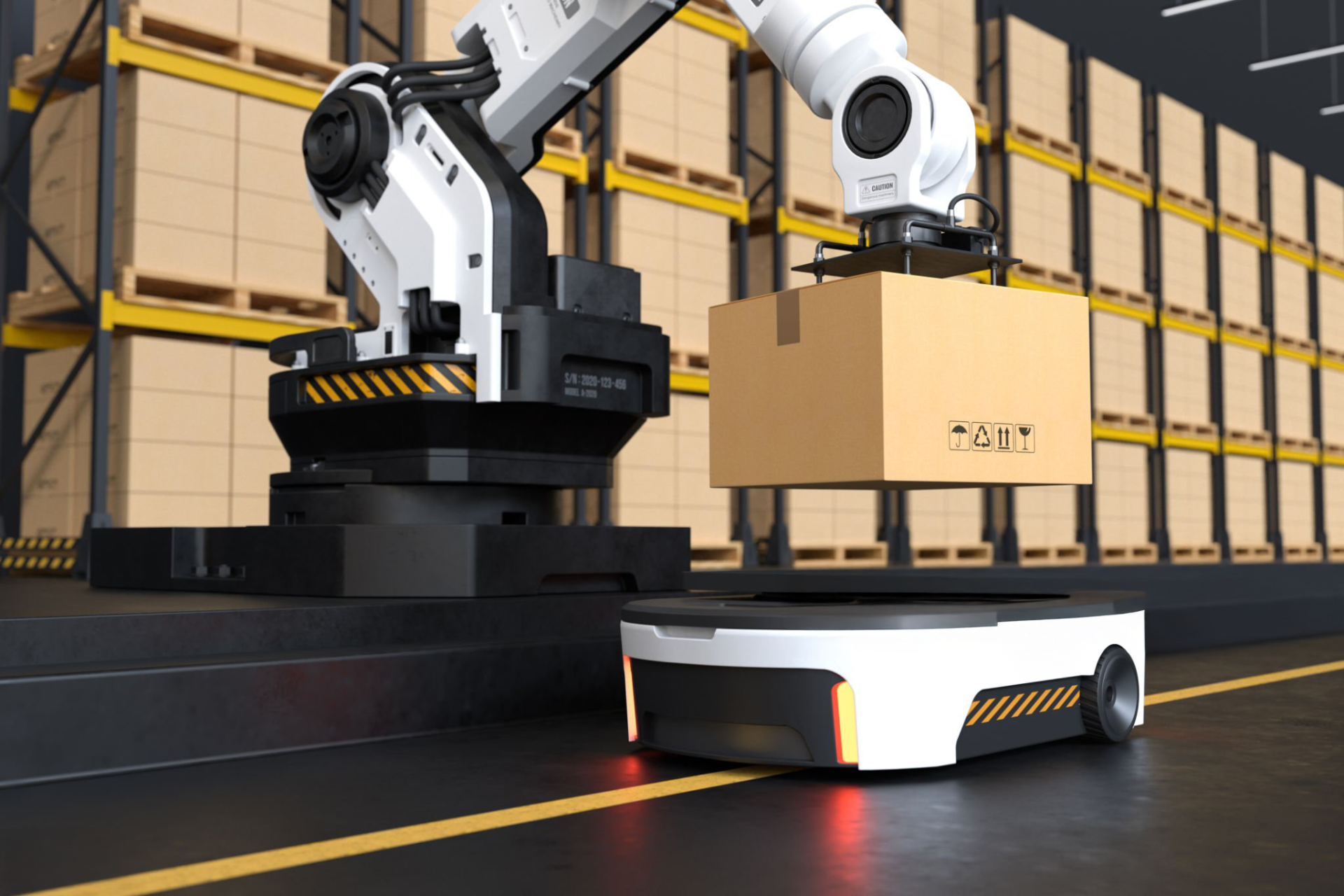
Autonomous mobile robots (AGVs) or robotic vehicles in warehouses and hospitals require rapid acceleration and precise braking. In these scenarios:
Supercapacitors enable smooth manoeuvres, reducing the risk of collisions or skidding.
They can store energy during deceleration (regenerative braking) and release it during periods of greater effort, improving the overall efficiency of the system.
By reducing the instantaneous load on the batteries, they extend their life and reduce maintenance costs.

Emerging innovations and new architectures
In addition to traditional applications, supercapacitors are enabling new robotic architectures:
Modular, lightweight robots: with the instantaneous energy provided by supercaps, it is possible to design systems that are less dependent on bulky batteries, increasing the robot’s mobility and flexibility.
Air-land hybrid robots: drones or mixed robots that alternate between flight and surface movement can use supercaps to manage energy peaks during take-off, landing or on difficult terrain.
Energy intelligence: by combining supercapacitors with predictive management systems, robots can modulate energy delivery according to the mission, optimising autonomy and safety.
Durability, reliability and operability in extreme conditions
Supercapacitors can withstand over a million charge cycles, operate in wide temperature ranges and tolerate high stress without loss of performance. This makes them ideal for robots working in:
1) Hot or cold industrial environments, where traditional batteries degrade rapidly.
2) High-frequency operating contexts, such as 24/7 production lines or automated warehouses.
3) Critical emergency situations, where robots must complete operations without interruption.
A look to the future
The integration of supercapacitors into robotics opens up innovative scenarios: more compact, agile and intelligent robots, capable of moving and operating efficiently with predictive energy management. Hybrid supercap-battery systems not only increase durability and reduce maintenance, but also enable the design of lighter, faster and more resilient robots, ready for increasingly complex applications, from industry to healthcare to autonomous exploration in remote environments.
READ THE OTHER ARTICLES
Supercapacitor technology: a technical overview
SUPERCAPACITOR TECNOLOGY: A TECHNICAL OVERVIEW 15/10/2025 Supercapacitors represent one of the most fascinating developments in the field of energy storage.Unlike traditional batteries, …
Supercapacitors: the key to modern logistics
SUPERCAPACITORS: THE KEY TO MODERN LOGISTICS 25/09/2025 From automated warehouses to AGVs: how supercapacitors are transforming logistics processes The evolution of logistics, …